

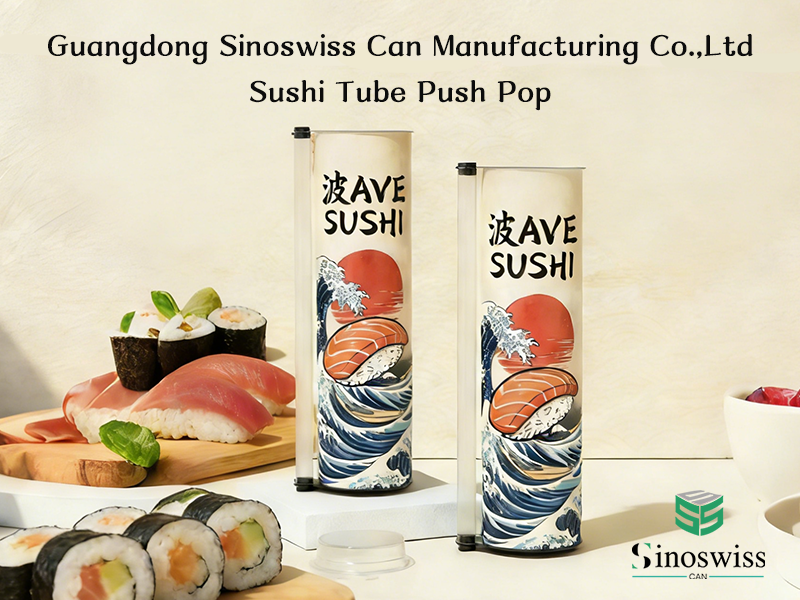
In recent years, the global sushi market has witnessed steady growth driven by the rising popularity of healthy and international cuisines. As consumer demands for food safety, convenience, and environmental protection continue to escalate, the packaging of sushi—once a supporting element—has gradually become a key factor influencing consumer choices and brand competitiveness. Among various packaging solutions, paper can packaging has emerged as a game-changer, breaking the limitations of traditional packaging forms and injecting new vitality into the sushi industry. This article explores how paper can packaging is reshaping the sushi consumption experience and leading the sustainable development trend of the food packaging industry.
Traditional sushi packaging, such as plastic boxes, foam containers, and glassware, has long dominated the industry. While these options have specific merits, they can no longer meet modern consumers' evolving needs. Plastic and foam packaging are widely criticized for poor environmental performance, as they are hard to degrade and harm ecosystems. Glassware, on the other hand, is heavy and fragile, hindering sushi's takeout and on-the-go consumption. Against this backdrop, paper tube packaging—with its integrated advantages of eco-friendliness, portability, and safety—has quickly gained traction among sushi brands and catering businesses.
Environmental protection is the core advantage that distinguishes paper tube packaging from traditional alternatives. Amid the global push for carbon neutrality and sustainability, consumers are increasingly leaning toward products with eco-friendly packaging. Made primarily of food-grade virgin pulp—a renewable resource—paper tubes are biodegradable and recyclable. Unlike plastic, which takes centuries to decompose, paper tubes can be reused or recycled, significantly reducing packaging waste and environmental pressure. For sushi brands, adopting paper tube packaging not only responds to global environmental calls but also builds a green, responsible brand image, boosting consumer recognition and loyalty. Many well-known sushi chains have already switched to paper tube packaging with positive market feedback, proving that eco-friendliness has become a new competitive edge in the industry.
Beyond environmental benefits, portability and convenience are key highlights of paper tube packaging, perfectly aligning with modern fast-paced lifestyles. Traditional sushi packaging is often bulky, making it difficult for consumers to enjoy sushi during commutes, outdoor activities, or business trips. In contrast, paper tube packaging features a lightweight, compact design with strong sealing. Easily stowed in backpacks, handbags, or even pockets, it allows consumers to savor fresh sushi anytime, anywhere. The sealed design also prevents sushi from being crushed and locks in freshness, avoiding taste loss common with traditional packaging. Most paper tubes are easy to open and require no additional tableware, greatly enhancing consumption convenience. This has expanded sushi's consumption scenarios, helping brands tap into potential markets like takeout, convenience stores, and outdoor catering.
Food safety is the cornerstone of the food industry, and paper tube packaging excels in this regard. High-quality sushi paper tubes are made of food-grade virgin pulp that has passed rigorous safety inspections, free of harmful additives and odors. Complying with international food hygiene standards such as FDA and EU 10/2011, they are safe for direct contact with sushi. Compared to low-quality plastic packaging that may release harmful substances at high temperatures, paper tubes are more stable and reliable, providing solid food safety guarantees. Additionally, their moisture-proof and fresh-keeping properties slow down ingredient oxidation and deterioration, extending sushi's shelf life. This is particularly valuable for sushi brands engaged in long-distance transportation and sales, as it reduces food waste and improves operational efficiency.
Paper tube packaging also offers significant brand customization and marketing advantages for sushi businesses. In the highly competitive sushi market, standing out is critical. Paper tubes support high-level customization, including size, shape, color, and printing. Brands can print logos, brand stories, and promotional information on the packaging, turning it into a mobile "brand showcase." For instance, Japanese-style sushi brands may use minimalist paper tube designs with traditional patterns to highlight cultural connotations and premium quality, while trendy brands opt for bright colors and fashionable prints to attract young consumers. Customized packaging not only enhances product recognition but also strengthens the emotional bond between brands and consumers. Moreover, unique, attractive paper tube packaging is likely to be shared on social media, driving word-of-mouth promotion and additional marketing value.
The application of paper tube packaging in the sushi industry also brings positive impacts across the entire industrial chain. For packaging manufacturers, rising demand has driven the development of the paper packaging industry, promoting technological innovation and production equipment upgrades. Many manufacturers have introduced advanced production lines to improve efficiency and quality, and developed more eco-friendly, functional paper materials. For catering businesses, paper tubes optimize logistics and storage—their stackable design saves space and reduces transportation costs, while the lightweight design lowers carbon emissions during shipping. For consumers, paper tube packaging delivers a safer, more convenient, and eco-friendly experience, fostering the healthy development of the sushi market.
The future prospects of paper tube packaging in the sushi industry are promising. With stricter environmental policies and growing consumer sustainability awareness, demand for eco-friendly packaging will continue to rise. As a representative of eco-friendly packaging, paper tubes will be more widely adopted in the sushi industry. Technological advancements will further upgrade paper tube functionality and design—for example, waterproof and oil-proof paper materials will expand their applicability to more sushi types, while integrating QR codes and anti-counterfeiting labels will enable product traceability and enhance consumer trust. Cross-border integration with culture and art will also bring innovative design ideas, creating more personalized and diverse consumption experiences.
However, the promotion of paper tube packaging in the sushi industry faces challenges. Firstly, production costs are higher than traditional plastic packaging, increasing operational pressure for small and medium-sized sushi businesses. Secondly, the lack of unified industry standards may lead to uneven product quality. Addressing these issues requires collaboration between governments, industry associations, and enterprises: governments can introduce support policies to reduce cost pressure; industry associations can formulate unified standards to regulate production and quality; enterprises can strengthen R&D to cut costs and improve quality.
